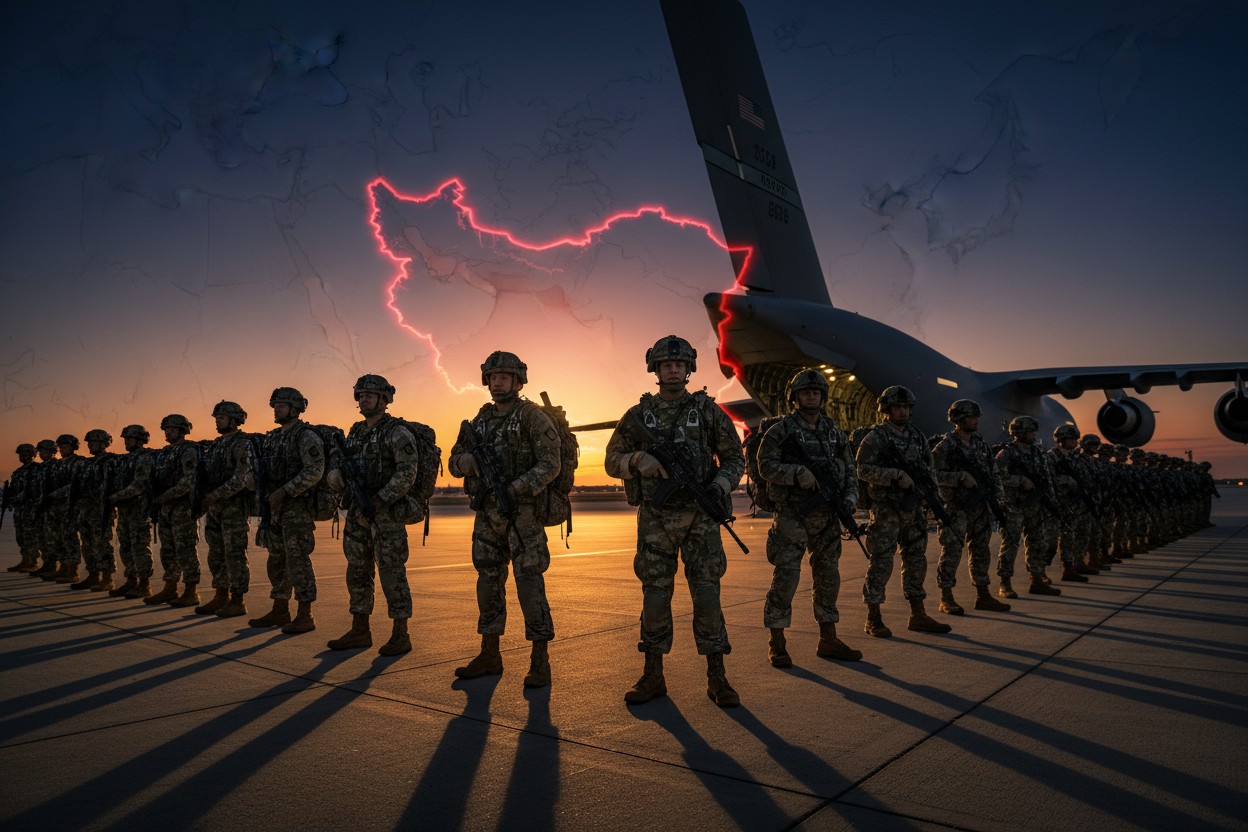
America’s aggression emboldens North Korea’s nuclear program, as more nations seek the only currency Washington respects
03/24/2026 / By Lance D Johnson

The United States has spent decades positioning itself as the global arbiter of who may possess nuclear weapons, waging wars, toppling governments, and imposing crippling sanctions under the banner of non-proliferation. Yet a stark reality has emerged from the rubble of American military interventions from Iraq to Libya to Iran: the very nations Washington seeks to disarm are watching its pattern of aggression and concluding that nuclear weapons represent the only reliable insurance policy against becoming the next target.
As North Korean leader Kim Jong-un declares his nuclear arsenal provides leverage against American “terrorism and aggression” and former Russian president Dmitry Medvedev warns that more nations will pursue atomic arms because “humanity has not invented another way to guarantee self-defense and sovereignty with certainty,” the United States finds itself trapped in a self-fulfilling prophecy. Its own bellicose actions in the Middle East and beyond are driving precisely the proliferation it claims to oppose, leaving Americans less safe and the world more dangerous.
Key points:
- Kim Jong-un accused Washington of carrying out “state terror and aggression” globally, arguing North Korea’s nuclear weapons provide a strong safeguard against potential attacks
- Medvedev stated that global instability and the breakdown of world order are pushing nations to seek nuclear weapons as the only proven guarantor of sovereignty
- The U.S. and Israel’s attack on Iran last year, aimed at halting nuclear efforts, has reinforced the lesson that nations without such weapons remain vulnerable
- The ‘Libyan model’ of denuclearization, once offered to North Korea, serves as a cautionary tale after Libya surrendered its program only to face NATO-led regime change
- Russia’s preservation of sovereignty through its nuclear arsenal demonstrates why atomic capability remains the ultimate deterrent against American intervention
The Libyan lesson and the price of disarmament
For nations watching American foreign policy unfold over the past two decades, a brutal calculus has taken shape. Libya under Muammar Gaddafi voluntarily dismantled its nascent nuclear weapons program in 2003, accepting the so-called Libyan model of de-nuclearization in exchange for normalized relations with the West. Within eight years, NATO warplanes, led by the United States, were bombing Libyan government forces, and Gaddafi was dragged from a drainage pipe and murdered by rebels backed by American air power. The lesson was not lost on Pyongyang.
When Kim Jong-un rejected de-nuclearization proposals from South Korea, which he described as “the most hostile state,” he was speaking from a position that Libya never had. North Korea withdrew from the Nuclear Non-Proliferation Treaty in 2003, the same year Libya surrendered its program. Two decades later, North Korea possesses nuclear warheads and ballistic missiles believed capable of reaching the US mainland. Libya’s government no longer exists.
Kim’s recent policy address to newly elected lawmakers laid bare the strategic logic driving this divergence. He accused Washington of carrying out “state terror and aggression” globally and argued that such actions justify Pyongyang’s concerns about the American military presence in the region, including deployments involving nuclear-capable assets. “Our nation is no longer a country under threat,” Kim declared. “We possess the power to pose a threat if necessary.”
The North Korean leader’s words carry a chilling honesty that American policymakers would be wise to heed. From Pyongyang’s perspective, nuclear weapons have delivered benefits beyond defense, with Kim claiming the program has supported scientific progress and economic development. He stated that “hostile forces claiming that there would be no prosperity without nuclear disarmament” had been proven categorically wrong.
A cascade of proliferation driven by American aggression
The pattern extends far beyond the Korean Peninsula. Medvedev, speaking to Kommersant in an interview published in late January, painted a picture of accelerating proliferation driven by American and Israeli actions. His assessment came against the backdrop of last year’s attack on Iran by Israel and the United States, carried out with the stated aim of halting Tehran’s nuclear efforts. Iran has consistently denied pursuing nuclear weapons, but the attack reinforced a dangerous precedent: nations without atomic arsenals remain targets.
Medvedev expressed deep pessimism about the future of nuclear non-proliferation, stating that “the rift that has formed in the world order is pushing a number of states to find the most effective ways to defend themselves.” He argued that while nuclear weapons raise the stakes in conflicts, they also promote stability by “putting fresh air into the brains of anyone with dangerous designs” against other nations. This is a formulation that those who have witnessed American military interventions across the Middle East can readily understand.
The former Russian president noted that a range of nations possess the technical capacity to pursue military nuclear programs, and some are actively researching in this area. “That may be against the interest of humanity, but let’s be honest,” he said, “humanity has not invented another way to guarantee self-defense and sovereignty with certainty.”
Russia itself has preserved its sovereignty thanks to its nuclear arsenal, Medvedev noted, and is developing new delivery systems in response to deteriorating non-proliferation mechanisms. He pointed to the Europeans and the Trump administration’s constant provocations as factors pushing Russia toward harsh responses.
For Americans, the implications are dire. Each military strike, each regime change operation, each act of “state terror and aggression” as Kim described it, reinforces the lesson that nuclear weapons are not an offensive tool but a defensive necessity. The nations that possess them survive. The nations that surrender them become cautionary tales. And as more nations reach this conclusion, the United States faces a world where its coercive power diminishes while the number of adversaries capable of striking American soil expands.
The expansion of North Korea’s nuclear program
The Federation of American Scientists’ Nuclear Information Project, in its 2024 Nuclear Notebook published in the Bulletin of the Atomic Scientists, offers a sobering assessment of North Korea’s rapidly advancing nuclear capabilities. The authors, led by director Hans M. Kristensen, estimate that Pyongyang has produced enough fissile material to hypothetically construct up to 90 nuclear warheads, though the actual assembled arsenal likely numbers around 50.
More concerning than the raw count is the dramatic modernization and diversification of North Korea’s delivery systems. The country has moved beyond its previous reliance on liquid-fuel missiles, deploying new solid-fuel long-range strategic missiles that can be launched with far less warning time. This technological leap, combined with the development of short-range tactical missiles and sea-based launch platforms, significantly complicates any potential preemptive strike calculations. These advancements lend concrete weight to Kim Jong-un’s recent boasts about posing a “credible nuclear threat” to the United States mainland.
The Federation’s assessment underscores that North Korea’s nuclear program is not static but actively evolving, with each new missile test and warhead production cycle reinforcing the strategic logic that drove Pyongyang to pursue nuclear weapons in the first place: the belief that only atomic capability can guarantee regime survival against American aggression.
Sources include:
Submit a correction >>
Tagged Under:
American foreign policy, ballistic missiles, big government, chaos, Dangerous, Dmitry Medvedev, geopolitical instability, Kim Jong-Un, Libya model, Middle East, military intervention, national security, Non-Proliferation Treaty, North Korea, nuclear capability, nuclear deterrent, nuclear weapons, regime change, state terrorism, terrorism, US aggression, violence
This article may contain statements that reflect the opinion of the author
RECENT NEWS & ARTICLES